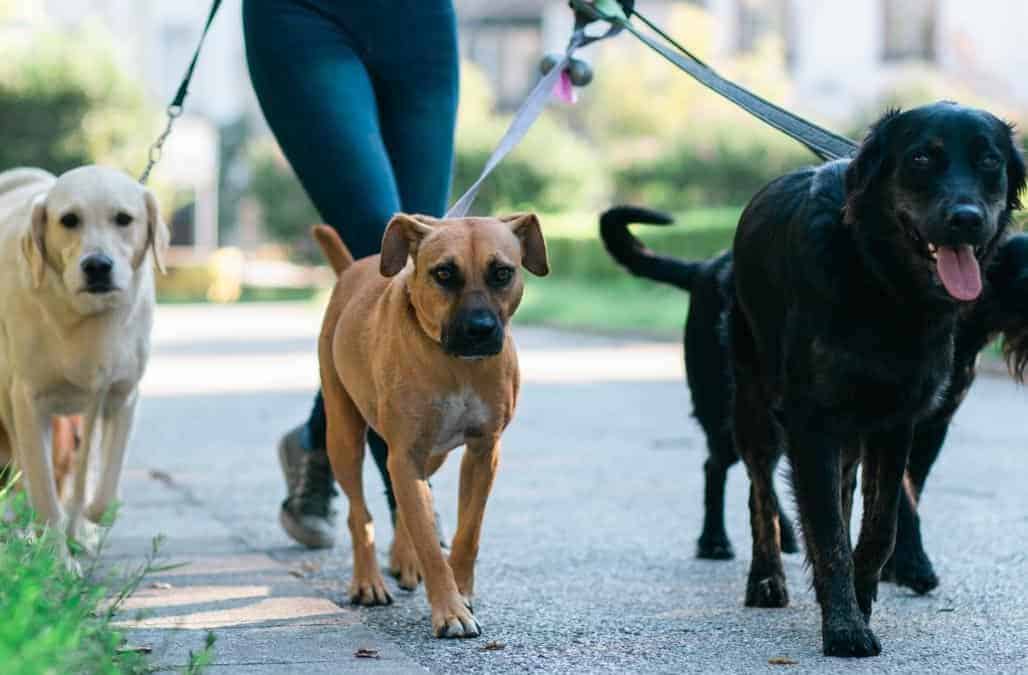
Hiring someone to come into your home to care for your precious fur baby isn’t a decision to take lightly. When you look at the benefits, you see that hiring a Dog Walker can increase the quality of both you and your pup’s life exponentially. Whether you’re looking to get Fido a little more fresh air, hoping to help Gracie shed a few pounds, or just wanting to increase the quality of Lucy’s daily life a Dog Walker can be a great option for you and your baby.
Here are some of the ways that having a Dog Walker in your pet’s life will help:
Peace of Mind
Do you find yourself worrying about your dog having to “hold it” or wondering if they are lonely all day? The guilt of a working pet parent is real and a dog walker may be able to help! Peace of mind is knowing that your precious fur baby is not crossing their legs or sitting at home being lonely all day. This can help you to be more productive at work and give you more balance in your human/dog relationship. Peace of mind goes a long way in the overall yin and yang of pet parenting!
Exercise is good for the soul!
Exercise is a crucial component to any dog’s life no matter their age. Finding the right dog walker to give your pet the appropriate amount of physical movement for their breed, age, and energy level is important. Exercise improves the overall health of your dog which can increase their life span. Who doesn’t want their precious pup around as long as possible?!
Saves You Time
Are you a Busy Bee? Early mornings/late evenings? Never enough hours in the day? You want to give your dog a beautiful, long walk just for them everyday but simply don’t have time? A dog walker helps to ease the stress of one more thing on your to-do list. Enjoy having a happy, tuckered out, pup post-walk and the peace of mind that you provided something just for them that day without the stress of squeezing it in!
Improves Pet Behavior
A well-exercised pup is a well-behaved pup. Many times our dogs have energy that we can’t help them exert. That energy can manifest negatively in chewing on the furniture, barking at every squirrel that runs by the window, or giving the mailman a piece of their mind. Sound familiar? When our dogs are well-exercised they release those held energies through exertion and stimulation of their senses improving their overall behavior at home.
Socialization!
While you may not be a social butterfly and you think your pet isn’t either, socialization is a wonderful way to build their confidence. Meeting a new person and building trust with them as they walk will expand your pet’s “social circle” which ultimately lessens fears and apprehension they may be carrying. Likewise, group hiking/walks is an excellent way for them to socialize with other dogs. This can help to ease the alpha dog mentality they may have, making them a happier more well-rounded pup.
BONUS: Benefits of Exercise for your Dog
Whether you walk your dog yourself or you hire a dog-walker, good exercise is one of the most important gifts you can give to your dog. From their everyday health to their overall confidence, exercise is the best medicine you can give your dog for a happy, healthy lifestyle!
Top three benefits of exercise for your pup
Positive overall health “If you don’t use it you lose it” is true for our pets, too. It may seem obvious to you, but you may be surprised by how many dog owners don’t actually walk their dogs on a daily basis. Exercise in dogs has been known to drastically reduce the risks of heart disease, nasty infections and even depression. Daily exercise keeps obesity at bay, stimulates over all healthy joints, and ultimately causes fewer visits to the vet. This means a fuller heart as a pet parent, and keeping a little money in your pocket isn’t a bad perk either!
Improves behavioral problems such as excessive barking, licking, chewing, digging, and overall anxiety. Many pet owners may not realize that most often these behaviors occur out of boredom. Every walk stimulates your dog with thousands of new scents and sights, which actually makes them even more tired. In addition, the exertion of their energy makes them feel more fulfilled and ultimately calmer when back at home. This reduces their need to bark, dig, chew, scratch, etc. creating a more positive living environment for everyone involved.
Builds Confidence Exercise outside of the home can help your pet trust their environment more. From scents to sights, the exposure that physical activity gives your pet builds confidence with every walk they take with you or your walker. If your dog does not receive exercise they will find a way to release their energy in destructive behaviors. By giving them a place to exert that energy they are able feel a sense of comfort and control, all thanks to you!
Even in the “New Normal” world there are pets (thank goodness!) and those pets need to be cared for! We at Just Around the Corner have worked diligently to enhance safety for our clients, their pets, and our employees. Aside from masks and extra sanitizing we hope our furry friends won’t even notice a difference! These last few months have had us asking things like… How will we ever return to “normal”? What will the NEW normal look like? Can we reopen? If so, WHEN? What can we change to ensure the safety of our family, friends and clients? All questions that you may have asked yourself recently too, right? Fear not, your favorite pet care company has the answers for you regarding our services and the adjustments we are making.
Safety Guidelines
Before the job starts
If an employee is not feeling well or discovers any safety/health concerns they will immediately contact the office and their schedule will be reassigned until they are back to feeling 100%.
We ask that if you as a client will be home during the scheduled visit and are not feeling i.e. fever, body aches, cough, etc. that you contact the office immediately to reschedule your pet’s visits.
Minimizing exposure is of the utmost importance to us, and while it may not always be convenient we are committed to the safety of our clients, your pets, and our employees.
On the Job
All employees will wear an approved face mask covering both the nose & mouth for the duration of every visit.
Antibacterial sanitizer will be used by all employees several times throughout each visit.
Employees will sanitize directly before starting each visit or touching any part of client property including but not limited to lockboxes, gates, newspapers/mail & doors.
Minimizing Exposure
In order to keep exposure to a minimum we will be handling only what is necessary to care for each pet.
We will continue to use the client’s designated collars/harnesses/leashes and encourage our walkers to disinfect prior to and post use.
Moving forward we will not be handling toys, treats, food dishes or water dishes in an effort to minimize exposure for everyone.
We urge you to leave extra water out (if needed) for your pet(s). You are welcome to leave specified treats or pre-portioned food in their bowls on the counter if you would like your pet to receive those things during their visit.
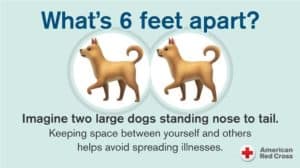
Our walkers/pet care associates will also be practicing safe social distancing (6’ apart) at all times.
New Chat Feature
We are excited to introduce the new Chat Feature as a replacement to our previously handwritten notes. PPS (Power Pet Sitter) now has a mobile app with a Chat Feature. When you log into the PPS app, you will see a new box in your visit labeled “chat”. When you tap on the Chat button you will see that a note is waiting for you from your walker/sitter for that day. This will, again, help to limit the number of items touched and overall exposure during each visit. PLUS, you will get to see the note as soon as your visit is complete, no more waiting until you get home to see how it went for the day. YAY! Please note: We will no longer be leaving handwritten notes at the end of each visit as these awesome messages will replace those. Please download the app today! Android, Apple
At the JAC Office
Management at JAC will continue working diligently to keep our team safe and healthy as we make this transition into our “new normal” as safe and easy as possible. We have created these new guidelines in accordance with the Occupational Safety and Health Administration (OSHA), the Center for Disease Control (CDC) and all State and local municipalities in response to Coronavirus.
Our Mission
At Just Around the Corner our mission has always been “Peace of Mind for our clients” and “One size does not fit all”. Please know that within these new guidelines we will continue to take situations/requests on a case by case basis. If something listed above may cause harm/discomfort to you as a pet owner or your pet, we are available to discuss the situation with you and come up with a positive solution for everyone involved.
We are all in this together and look forward to our soft reopening May 18th. Please do not hesitate to call or email with questions or concerns. We are here for you and your fur babies, always. 508-245-1389 or jacpetsit@gmail.com
What a winter we had, especially the month of March. And of course, April was not typical spring temperatures either. In fact, it was downright cold for most of the month.
Finally, we are in the heart of spring, with summer not too long away. We are all so happy to get out of the house and take our pups on some nice, long hikes. As much as we are excited to finally shed the winter clothes and enjoy the outdoors, we now have outdoor troubles to worry about. By that I mean: the dreaded ticks. Not a topic most of us want to think about.
Here is some helpful information for you:
Where are the common places dogs pick up ticks?
Dogs typically get ticks from walking through high grass, shrubs and wooded areas. Ticks will typically hang out at about 18-24 inches off the ground waiting for the next warm body to brush by. Did you know that ticks can live well over a year without feeding? They will lie and wait and wait and wait until an animal/human walks by the plant material that they are hanging onto, and from there climb onto their food source.
What do ticks do once they find your pup?
Ticks are NOT jumpers. Once a tick finds a host it typically starts from the bottom – feet and legs — and crawls upward. They usually land around the head, neck and ears where the skin is thinner. That is where they will bite, latch on, and hang on for days.
Once the tick bites its host, it can take around 24 hours for the germs, infections and viruses to make their way into the tick’s salivary glands to be released into the host. This is why it is so important to do a daily tick check.
How can I avoid having my pet pick up a tick while we are out?
Your pet is less likely to pick up a tick when they are walking with you on a path. When you can, avoid off-leash hiking in areas where there is high grass, dense undergrowth. Those areas encourage dogs to sniff and investigate their surroundings, and they can easily pick up a tick waiting at the top of the grass or brush for them to pass by.
What is the best way to remove a tick:
IT IS ABSOLUTELY CRUCIAL to remove ticks properly.
It is best to go right to your vet to remove ticks unless you have a lot of experience removing ticks and are confident in disposing of them safely. Making an incorrect or unsuccessful attempt can cause more problems than if you left the tick alone until you can get your pet to the vet to have it removed properly. For example, you could easily break off the tick’s head, leaving it behind embedded in your pet’s skin.
If you feel you must remove the tick yourself as you are unable to get to a vet, pointy tweezers should be your weapon of choice. Using pointed tweezers, grasp the head of the tick as close to the skin as possible, and pull upward quickly. It’s important to squeeze the tick by its head only to avoid the risk of pushing the infected saliva into the bite wound.
3 common tick diseases in New England and possible symptoms:
LYME DISEASE:
Humans will most likely get a “Bulls eye” rash, but dogs are different and will not display a rash. Look for: random, sudden onset leg lameness and leg shifting that lasts more than a day, loss of appetite, depression, tiredness and reluctance to move.
ANAPLASMOSIS:
Watch for loss of appetite, lethargy, lameness, reluctance to move, neck pain, neurological signs, bruising of gums and belly and nose bleeds.
EHRLICHIA:
Keep an eye out for depression, lack of energy, loss of appetite, discharge in the eyes and nose, nose bleeds, bruising on the gums and belly, lameness and joint pain.
These are just a few possible symptoms. The best rule of thumb: know your pet. Watch for any changes in them physically or emotionally. Remember, you are your pets’ best advocate. You know when they are not feeling well. They are not able to tell us what is happening. If you see any changes be sure to take them to your veterinarian.
WITH TICK BITES, PREVENTION IS KEY:
Always do a complete body check for yourself and your dog after you have been out with your dog on a walk or hike. This is especially Important if you walk in areas known for high tick population.
Take preventative measures to keep your pet from being exposed to ticks. These measures include topical applications (lotions, cremes), tick collars and even some oral medications.
Consult with your veterinarian to find the optimum choice for your dog.
Being educated about ticks and following some simple rules will allow you to enjoy your walks with your pups…. Here’s to nice weather! Hope to see you and your pups on the Trailside!!
Do you have a favorite Tick Prevention idea? Post below!
You may have heard or read on social media last year that we sadly lost Bentley, a five-month-old member of our Just Around the Corner family, after he ate a toxic mushroom in his parents’ yard. This is a very difficult posting, but we want to let people know how dangerous mushrooms in your yard can be. There are just no words to express how deeply sad we are and how we wish we could make his mom and dad feel better.
Bentley was playing in his yard, as all puppies do. Everything in the mouth!!!!! He grabbed a mushroom in the yard and swallowed it before his dad could get it away. By the next day, he became very ill. He spent over a week in ICU at CCVS and, sadly, passed away soon after…
PLEASE…PLEASE…PLEASE always check your yard for mushrooms and remove them before letting your babies out. We send our deepest thoughts and prayers to Bentley’s mom and dad.
Despite the nearly year-round (except wintertime) occurrence of mushroom poisoning in most of North America, it is probably underestimated, so it’s wise for all of us to be vigilant. Don’t let yet another tragedy happen to you. “When in doubt, pull it out!”
We had an overwhelming response to this posting on Facebook, and requests for more information. Therefore, we have done our research, and the result is the following blog post:
Types of toxic mushrooms and symptoms of mushroom poisoning
Clinical signs of poisoning depend on the species of mushroom, the type of toxin in the mushroom, and the pet’s susceptibility.
Amanita, the most dangerous type, is attractive to dogs, particularly A. phalloides (death cap or death angel), A. muscaria (fly agaric), and A. pantherina (panther cap), probably because of the fishy odor. The ingestion of A. phalloides and other genera, including Galerina and Lepiota (false parasol), results in a series of phases: gastroenteritis, false recovery, and liver failure. Muscimol and ibotenic acid, the psychoactive toxins in toadstools (A. muscaria andA. pantherina), cause visual distortion and extreme sedation, among many signs.
Inocybe and Clitocybe produce muscarinic effects known as SLUD—salivation, lacrimation (excessive tear production), urination, and diarrhea.
Gyromitra spp. (false morels) generally cause vomiting and diarrhea. Most cases are mild, but seizures have been reported on rare occasions.
Hallucinogenic mushrooms such as Psilocybe(magic mushrooms, blue legs, or liberty caps), Panaeolus, Copelandia, Gymnopilus, Pluteus, and Conocybe cause disorientation, visual hallucinations, imaginary biting, hypertension, hyperthermia, seizures, and tremors, to name a few.
ASPCA provides more detailed information on the types of toxic mushrooms, mechanisms of toxicity, and treatment methods.
How to prevent mushroom poisoning
Keep an eye on your pets while taking them on a walk. Steer clear of areas where mushrooms grow.
Don’t take chances. Check your yard for mushrooms and remove them. It is difficult or even near impossible, even for mycologists (fungus experts), to distinguish toxic mushrooms from the nontoxic varieties. Adding to the complexity are the varying colors, shapes, and levels of toxicity in many species.
What to do after mushroom consumption
Although 99 percent of mushrooms are low-toxin or nontoxic, always assume that all mushrooms are potentially dangerous. Collect a sample of the mushroom, vomitus, or feces to bring with you to the animal clinic. Use a paper towel, waxed paper, or a paper bag for the mushroom. Do not use plastic material. Refrigerate the sample until you are ready to have it examined.
Take your pet to the vet for decontamination, in which vomiting is induced to remove the mushroom. In cases of actual poisoning, activated charcoal is administered to flush remaining toxins, followed by supportive care.
Contact the North American Mycological Association (NAMA) to identify and document the suspected mushroom. NAMA has a directory of identifiers across North America. There is also a listing for identifiers in Massachusetts.
One of the responsibilities we have as pet owners is to ensure that our pets are groomed on a regular basis. Some of us are able to handle this at home and do it ourselves. Maybe you are the person who lifts your dog into the tubby and you just can’t stand to do it another day? Or maybe a bath is fine, but you just have trouble with cutting toenails and cleaning ears. Could be time to take them to a dog groomer. So, where do you find the best dog groomer in Plymouth, MA?
There are a number of considerations for finding that best groomer for your pet.
TOP 6 THINGS TO LOOK FOR WHEN CHOOSING THE BEST DOG GROOMER:
How does the location look: Is the shop clean and does it smell clean. Is it a professional business.
Are the staff knowledgeable: does the staff understand the needs of your pet.
Are the pets monitored: Do they have proper size cages to secure your pet. Are there other pets in the same area. Are the pets always visible to the staff?
Are they trained in breed specifications: Does the dog groomer know the specific needs of your breed. Can you see photos of previous breeds that they have serviced?
Do they handle fearful and aggressive dogs: Will they have fearful and aggressive dogs in the facility while your pet is being groomed and what precautions do they have in place.
What type of training do they have: Do they have any certification for dog grooming. How long have they been in business? What are their credentials?
We have taken the time to do a Google search to try and help you find the Best Dog Groomers in the Plymouth, MA area. Please be sure to follow due diligence in finding the perfect match for your dog.
BEST GROOMERS IN PLYMOUTH, MA.
Paws in Paradise: Owner Carol Shapiro with over 25 years of experience. Grooms only dogs under 40 pounds. Sandwich Rd., Plymouth, MA. 508-280-6761.
Best Pet Salon: Owner Tracey with 25 plus years of experience. All Breed Professional Groomer. 739 State Rd., Plymouth, MA. 774-237-8738.
Grooming at Scarlet Farms: Owner Paula with over 20 years of experience. All Breed Professional Groomer. 220 Jordan Rd., Plymouth, MA 774-454-4823.
Rover Make Over: Owner Marlene. All Breed Professional Groomer. 2289 State Rd., Plymouth, MA. 508-888-3906.
Grooming Magic: Owner Louanne Chase. All Breed Professional Groomers. 117 Sandwich St., Plymouth, MA 508-732-0255.
It is so important to find someone that not only you feel comfortable with but your dog is comfortable as well and looks forward to going back.
Have you tried any of these groomers or have you used other groomers in the Plymouth area? Would love to hear about your experience and recommendations! Please comment below.






Recent Comments