When you leave for vacation it is so stressful to leave your furry family behind. You have done your research and hired a professional pet-sitting company so that you can go away with peace of mind knowing that your pets are taken care of. But what about your home? With a Pet Sitter, you can also have peace of mind that your home is taken care of as well. This is a free benefit few realize when they hire a professional Pet Sitting Company. Yes, you read it right…..a FREE benefit.
What could possibly happen while you are away on vacation? We all know the most obvious things: the biggest one…..a break in……who would know….you are gone for 10 days…..you would never know until you got home. How awful! There are so many other things that can happen…
Let me tell you an actual story. How lucky that these clients wanted to have their fur babies stay in their own home. Just Around the Corner was hired to do three visits per day to take care of Brady, their beloved Boxer, and his two feline sisters, Amber and Anabelle. For the first two days, we visited, fed, and played with everyone, and all was going well. On the third day of their 10-day vacation, as we drove down their road at 6:30 in the morning on our way to take care of them we could see smoke coming from their house. Our hearts, of course, starting pumping ……and going through our minds were the babies in the house. We ran right in and found all the animals waiting for us in the living room looking anxious. We got all of them out of the house and put them in our car. We called 911 and the fire department responded quickly. On inspection of the house, the fire department found a faulty wire in the heating system. They said in another hour it would have sparked a fire, which could have been a total loss. Because we were there to pet sit, we were able to get the pets to safety, call the fire department and have someone come out and fix the heating system. What a relief to our clients! Their house was saved, their pets were saved, their heating system was fixed, and the pets could remain in their home.
Here are 5 things a Pet Sitter does for your home:
Rotate lights through-out the house each day so that it looks like someone is home.
Bring in Newspapers and Mail each day.
Rotate blinds and shades.
Security check the house, checking all windows and doors to be sure the house is secure.
Check to be sure all systems in the house are running properly (electrical, water, heat, etc…).
So remember, “How your home is more secure by using a Pet Sitter”…….Not only are your pets part of our family, we also consider your home our home and will do everything we can to protect your pets and your home. With no extra charge for the care of your home……
Are you convinced to hire a professional pet sitter for your next vacation? Click here for more information on our services.
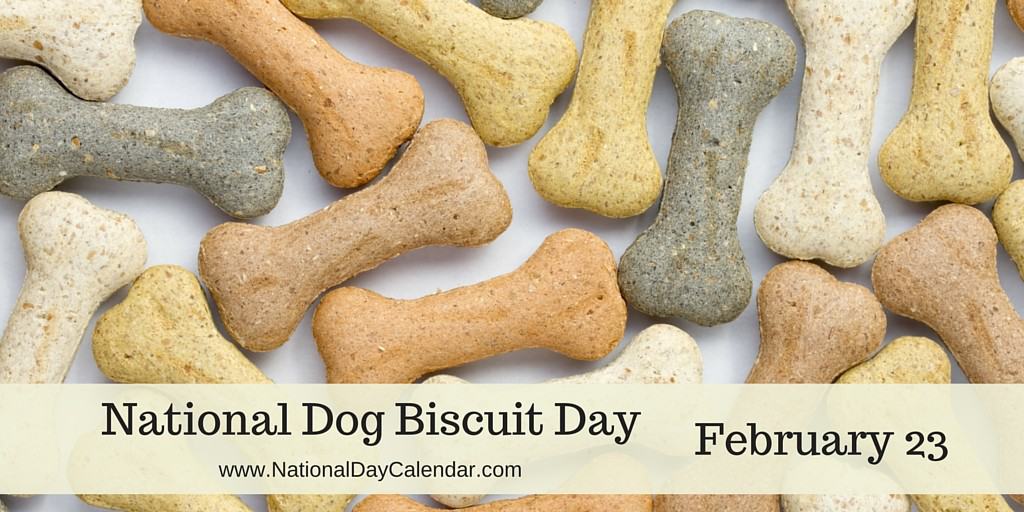
If your dog could talk, he would tell you how excited he is that National Dog Biscuit Day is on February 23rd. This day is celebrated here in the United States and around the world. Dog biscuits, or dog bread, have been around since Roman times. The origin of Dog bread was that the bread was not fit for humans; it was old or of bad quality, so they gave it to the dogs.
An American inventor, James Pratt, created the first known dog biscuits we know of today, sometime in the 19th century. He came up with a secret recipe for “dog cakes” made up of meat and vegetables. The “dog cakes” were first sold to English countrymen for their sporting dogs. Then, they were introduced in America and marketed at dog shows. Spratt’s product was supplied to army dogs during WWI. And, in 1907 Spratt made his first bone-shaped biscuit, known as Milk Bone. Milk Bone was bought by Nabisco in 1931 and acquired by General Mills in 1950.
Since then, dog biscuits have come a long way. There is a huge market for them, since so many people own dogs. There are hundreds of varieties of biscuits today; chewy treats, crunchy treats, soft treats, freeze dried or jerky treats, dental chews, bone-like chews, pig ears, rawhide, and the list goes on and on.
Chewing comes natural for dogs. They explore through chewing! Chewing helps dogs to exercise their jaw and sometimes clean their teeth. It keeps them occupied and gives them something to focus on. When a dog doesn’t have anything to chew on he can become destructive and start chewing on your furniture or other things around the house.
On any other day, you might give your furry baby a biscuit as a reward for doing something good or part of their training. But, this is his day…so give him an extra special snack or two. Dog biscuits may have changed through the years, but one thing has remained the same, dogs still love them and we humans love our dogs!
You can always find plenty of store bought treats. But you can also find thousands of recipes online to make your own yummy homemade goodies. You can also visit a dog bakery, where they specialize in tasty treats for canines. Either way, your pet will be very happy.
If you’ve grown with dogs, you probably know that bonding can be as simple as petting them for a few days to become best buddies for life. Bonding is definitely a more difficult process when you decide to get a cat. We’ve all joked about the haughty nature of felines, but most of those jokes come with more than the grain of truth attached to them. . .
Often times, people get a cat, expect instant bonding and jump to the conclusion that the cat will never want anything to do with them. Take a proactive approach and try a few techniques to better bond with the new feline family member.
Begin with these:
Don’t use negative reinforcement
With dogs people often use negative reinforcement to train them in the dos and don’ts around the house. In fact, many people claim that using this form of reinforcement never results in them getting moody or stand offish and that they simply learned not to potty in the house and all was well. While we don’t recommend that approach with dogs, we most definitely can tell you that cats don’t respond to negative reinforcement – at all.
Simply raising your voice at a cat is a good way to be dead to them for life. Cats have a very low trust threshold. One bad experience with you and building a bond is going to become infinitely harder. Save yourself a headache and focus on positive reinforcement methods if you have to train your cat in order to keep your bond in good standing.
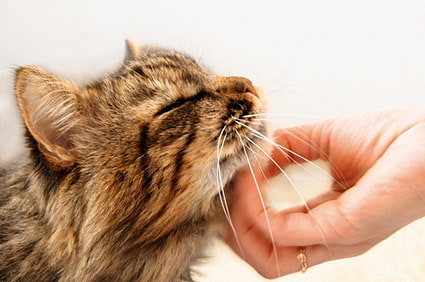
2. Be the giver of food. Don’t just leave food out 24/7. Cats bond much quicker with the people who feed them. The way to a cat’s heart is his/her stomach, so take advantage of that fact and associate yourself with him/her being fed. Your cat will start cozying up to you in no time. Petting your cat and rewarding him with a treat throughout the day will also remind him that associating with the humans of the house reap many rewards.
3. Be patient. You can force a cat to like you. Don’t try to play with them incessantly or pick them up all the time. Give your cat some space and let him/her come to you. The more you push for the relationship, the longer it’s going to take to build one.
4. Be interesting. Yes, I said it. Be interesting. Cats love dangling toys, string and even laser pointers. Throw a cardboard box or brown shopping bag in the middle of the floor and your cat is sure to come a calling. These are all great options that allow you to provide your cat with some much needed space. Once he begins to trust you, then go ahead play more interactive games that won’t scare him off and invade his space! Follow these basic tips and in time you’ll have every cat happily eating out of the palm of your hand.
If you’ve ever been unfortunate enough to contract lice then you’re probably familiar with the irritable pain dogs with lice experience. However, dogs actually catch a different species of lice entirely, one that can’t be passed on to humans.Whew!
The two types of lice are very different. . .
The two types of lice are very different. Where human lice moves quickly and enjoys clean hair, dog lice mostly stays stationary and prefers dirty manes. Dogs that are properly cared for within clean environments are highly unlikely to ever come in contact with canine lice, which is why consummate dog owners never experience the parasitic pests.
There are two forms of canine lice, chewing and sucking. Chewing lice chews on the skin of its victim while sucking lice, the more irritating of the two, latches onto a dog and sucks its blood. Both forms are easily transferable between canines and through contaminated objects, although they only target dogs.
The good news is that dog lice are easily diagnosable and treatable. They can be seen with the naked eye and look like small six-legged bugs. They don’t move, making it easy for you to run a brush or comb through your dog’s fur and see the pesky gangs of itchy invaders.
Treatment is incredibly simple. Your local pet store undoubtedly has a wide variety of shampoos, sprays and powders that will effectively kill and rid your dog of lice. You may need to treat your pup multiple times in order to also kills the eggs as they hatch, but your puppy is sure to be clean as a whistle after just a few days or a couple weeks of treatment depending on how bad his/her lice infestation is.
To prevent reinfection, thoroughly clean or get rid of your dog’s bedding and all the places he/she frequents. Be sure to disinfect all grooming utensils and you should be free of dog lice soon after discovering their existence.
Yes, they’re disgusting, but so easily dealt with that you won’t even have to contact or notify your local vet. After dealing with the lice, make sure your dog is kept clean and healthy and you’ll probably never have to worry about dog lice ever again.
Your pets, both female and male can benefit from being spayed or neutered. The choice to spay or neuter your pet is something very important to consider. You should weigh out all the options and discuss with your veterinarian to make the very best choice for your pet. Spaying is a surgical sterilization done to female animals to extract the ovaries and uterus. Neutering is a procedure done to the male dog or cat by removing the testicles.
By spaying or neutering you can:
Decrease the amount of homeless dogs and cats
Protect your pet’s health
Avoid disruptive behavior
Save money on pet care
In the U.S. there are homeless dogs and cats everywhere. Each year millions of animals enter shelters. Less than half of these poor animals get adopted and the remaining are euthanized. The best way to help decrease these numbers is to spay or neuter your pets.
Spaying helps females avoid uterine infections and breast cancer.
Spayed pets don’t go into heat and don’t have the need to mate.
Spaying and /or Neutering prevents overpopulation by having unwanted puppies or kittens.
Your male dog will be less likely to get testicular cancer if he is neutered.
A neutered dog or cat won’t have the urge to find a mate and will be more behaved.
When dogs and cats are in heat, they go wandering and come in contact with other animals, get hit by cars and many other undesirable situations.
Pets who have been spayed or neutered are less aggressive. They also tend to bark less. Dogs who are not neutered are prone to urine marking which is when they lift their leg to urine. Cats that are not “fixed” have the urge to spray, which can create a horrible odor in your home. This problem would be minimized or eliminated by spay or neutering.
Having your pet spayed or neutered has no effect on his intellect or learning capabilities. The procedure produces a kind of calming effect, which makes these pets better companions.
Are there risks involved with spaying and neutering? There are risks and possible complications, as with all surgical procedures. Your pet could be at risk for incontinence and some forms of cancer. Prior to the procedure your pet will be examined thoroughly to make sure they are in good health and can undergo the stress. You will be asked to keep your pet in a clean, quiet and peaceful environment after surgery.
You can be confident in your decision to spay or neuter knowing that these procedures are the most common done by veterinarians. The benefits far outweigh the risks. Many shelters and clinics offer free of low cost spay or neutering so there is finances should not stand in your way.
While herbs can be a safe alternative to conventional therapeutic medicinal practices, there are herbs that can be dangerous and even deadly when not used in the correct way. Herbs, just like conventional medicines may have side effects and can even interact with conventional medicines in an unsafe way. It is always to good practice to consult your veterinary doctor before introducing herb therapy to your pets, especially if he is on any type of medication or his immune system is compromised in any way.
So, which herbs are not safe?
Pennyroyal
is unsafe in high doses. It is highly concentrated and therefore should never be used pets.
Tea Tree Oil
is not safe for cats or small dogs. In larger dogs, tea tree oil may be used but extreme caution must be exercised. It must always be diluted in a 50:50 ratio with olive or almond oil.
Comfrey
may only be used in smaller doses and must not be used over long periods of time. Long term use may cause cancer and liver damage due trace amounts of alkaloids. Comfrey root must not be used internally as the root is even higher in alkaloid concentration. The leaves are safer to use.
Ma Huang
may cause irregular heartbeat and high blood pressure so use must be closely monitored. This herb is used to treat asthma in pets but should not be used if any of these side effects are present.
Yucca
can cause vomiting and bloating if used for over long periods of time, especially in large doses. Use small doses and sparingly.
Garlic
in small amounts can be used safely especially when used to treat for parasites, infections and cancers. Garlic should not, at any time, be given to a dog with anemia.
Wormwood
should never be used on pets. It can rid your pet of worms but could come at a lethal cost. Small doses are safe; however small doses are not effective in de-worming so, don’t bother!
As you can see, while herbs may be a natural alternative to conventional medicine, not all herbs are safe to use. Always consult your holistic veterinary doctor to determine if herb therapy is safe for your pet and under what health and dosing conditions. Take the steps to educate yourself and your pet will stay healthy and happy!



Recent Comments