Being a pet owner also involves taking responsibility for anything that pertains to your pet’s health. However, one area of pet care is often neglected and that is the ‘dental’ aspect.
Usually a dog develops twenty-eight deciduous teeth as a puppy between three to four weeks which would later increase to about forty-two permanent teeth by six to eight months. Therefore, there must be a kind of routine to be followed to ensure that your dog is healthy and those steps shall be discussed below but before that, the adverse effect of poor dental care must be noted.
Just as in humans, the mouth is relatively very warm and since you cannot always control what actually goes to your dog’s mouth every point in time, certain measures should be taken to ensure that your dog has good dental care. A dog’s mouth could harbour dangerous bacteria that can cause series of ailment and dental diseases such as tartar, or even Pyorrhea which can be very painful to your dog and may even render an affected dog quite inactive because the gum would have been inflamed. This may further result in the slackening of the teeth accompanied by emission of pus.
Apart from all these oral ailments, the inability to give a dog the oral care it deserves may lead to the establishment of bacteria colony in such a dog’s mouth and the toxins produced from such bacteria may affect vital organs such as the kidney, liver and even the heart.
To avoid this, the following steps must be followed:
Do not wait for your dog to be in serious pain and down and out before you know what the matter is, search for signs yourself. Because you are most familiar with your dog, create a time for a general checking of your dog’s mouth on your own to fish out any kind of unusual symptoms.
Sign up for a wellness program for your dog at a registered veterinary clinic. Your dog is entitled to a general check-up at least twice in a year with special attention being paid to the mouth.
Protect your dog against some oral ailments. Regular vaccination and administration of prescribed medication by a registered vet doctor could serve as a form of prevention.
Brush your dog’s teeth regularly at home or as advised by your vet doctor. It is very important that you always consult your vet doctor before choosing a particular brand of toothpaste so as to know whether your dog is allergic to some of the ingredients. There are other ways of dental cleaning for a dog such as giving them dental biscuits.
Finally, always be observant. Take away any hard and inedible substances away from your dog’s reach so as to prevent the dog from fracturing its teeth. Having a fractured tooth may irritate your dog’s nerves and cause an opening in the teeth which may turn out to be a source of infection.
Following a strict dental regime will help keep your dog happy and healthy for years to come. A little care now may save your dog a lot of suffering later on.
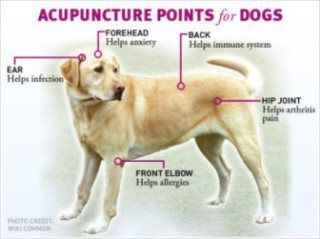
Did you know that holistic healing therapies can alleviate pain and illness for your dog? Specifically, acupuncture has demonstrated a great deal of success. Acupuncture has been used to treat various human conditions for thousands of years and has evolved into a common practice used by holistic healers, chiropractors, and physiotherapists. So think about it, why wouldn’t acupuncture be beneficial for your dog? The fact is that it benefits animals the way that it benefits humans.
There are so many advantages to using acupuncture as a part of your treatment regime for your dog. Acupuncture can help to solve your dog’s poor-digestion, chronic-diarrhea and skin-problems. Unfortunately in western society we are socialized by our norms to look for a quick fix, and only use what is considered to be “western medicine”. However, alternative therapies have existed for thousands of years, many having great benefit and success.
Furthermore these therapies can be done in conjunction with western methodologies. It is important to know that alternative therapies such as acupuncture do not demonstrate immediate results (quick fix), and necessitate more frequent and longer treatments. There are, however, situations in which there is immediate improvement with acupuncture, it is important to know that everybody and every condition are unique so results vary from person to person.
You may ask, how can acupuncture help my dog?
Well, there are various ways in which acupuncture is beneficial. Acupuncture serves to stimulate the body’s release of pain anti-inflammatory substances serving to give some relief. Acupuncture also helps to relax the muscle at the site of stimulation (by needle insertion), producing both a local and generalized pain relief. Acupuncture improves blood flow to the treated area helping to facilitate healing, oxygenation, and removal of metabolic wastes/ toxins. Medications can have implications for your organs; acupuncture doesn’t have any of these potential adverse side.
Just like surgery and some medications, acupuncture isn’t always appropriate or successful for some patient, condition, or disease.
Some conditions that may benefit from acupuncture include:
Hip dysplasia
Arthritis
Allergic skin conditions
Degenerative joint disease
Disease of the spinal cord
Reproductive problems
Seizures/epilepsy
Traumatic nerve injuries
Endocrine disorders
Asthma
Immune function
Systemic inflammatory conditions
Physical Performance
If you believe that your dog could benefit from acupuncture you should certainly look into it. In fact, dive into some research now before it may become necessary to treat your dog for any possible ailment. Remember, knowledge really is power, especially during difficult times. It could be the treatment regime that you are looking for. Trying new forms of treatments can make a difference in your dog’s health and wellbeing.
Choosing the right dog trainer for you and your furry family member can be one the most important and daunting decisions you will have to make regarding your dog. There is so much to think about, and it’s definitely not as simple as googling “dog trainer” and randomly choosing one!
If you have determined that you need the help of a trained professional to work with you and your pup, you have probably been bombarded by a royal ton of random people claiming to be the best, the only person available who speaks dog, the only dog trainer in existence who holds the key to your dog’s happiness and lifelong obedience. You have likely been offered more guarantees than you can possibly count, each swearing by different methods. Some claiming to be firm and disciplinary, others claiming to help you become your dog’s ‘pack leader’, and others who simply charge so much because of all their years and schooling making them the masters of dog psychology (this is all dripping with sarcasm).
There are so many options and so many individuals saying that their way is the best way. Unfortunately, if you choose the wrong way this can cause increased psychological harm in your beloved pet. So, with this being the case, how do you navigate through this vast ocean of alternatives and select the trainer who is actually qualified to work with you using healthy, safe, and positive (and let’s not forget effective) techniques?
First,
decide what the purpose of finding a trainer is. Do you want your dog to learn to be calm and not attack everyone and everything? Or do you just need your dog to learn basic commands… before choosing a trainer you need to know the purpose of training… have specific goals in mind.
Second,
you need to draw a line in the sand about your ethics and be assertive about them. Different people have different philosophies and ethics when it comes to training dogs. Do your research and make sure you have a clear idea of what you feel is okay and what isn’t (for example – choke chains, training spray, etc.). It is essential that you have a dog trainer that agrees with your values and supports them.
Additionally,
while there are many truly talented dog training and behavioral professionals who aren’t certified trainers, and while there are no solid rulebooks that necessarily dictate that a certified trainer is an expert, it is recommended that you search for a trainer with credentials. Certification does ensure that the trainer you hire to work with your beloved pup has had to pass some minimum requirements.
Still not sure who to choose? What are your friends and neighbors saying? Word of mouth is often the best way to find the best of what you are looking for. Ask people who are previous clients to find out about their methods, experience and success rate.
Finally, listen to your instinct. If you feel that something is wrong, don’t ignore the instinct! It is your furry family member’s wellbeing that you are concerned about… you are justified in this! AND … Don’t hesitate to be part of the process. If your trainer wants to exclude you, consider this to be a red flag. It is you that your dog has to respond to, you who lives with your dog, and you who is the paying customer! So don’t feel guilty for asserting that you want to be part of the process.
Your pets, both female and male can benefit from being spayed or neutered. The choice to spay or neuter your pet is something very important to consider. You should weigh out all the options and discuss with your veterinarian to make the very best choice for your pet. Spaying is a surgical sterilization done to female animals to extract the ovaries and uterus. Neutering is a procedure done to the male dog or cat by removing the testicles.
By spaying or neutering you can:
Decrease the amount of homeless dogs and cats
Protect your pet’s health
Avoid disruptive behavior
Save money on pet care
In the U.S. there are homeless dogs and cats everywhere. Each year millions of animals enter shelters. Less than half of these poor animals get adopted and the remaining are euthanized. The best way to help decrease these numbers is to spay or neuter your pets.
Spaying helps females avoid uterine infections and breast cancer.
Spayed pets don’t go into heat and don’t have the need to mate.
Spaying and /or Neutering prevents overpopulation by having unwanted puppies or kittens.
Your male dog will be less likely to get testicular cancer if he is neutered.
A neutered dog or cat won’t have the urge to find a mate and will be more behaved.
When dogs and cats are in heat, they go wandering and come in contact with other animals, get hit by cars and many other undesirable situations.
Pets who have been spayed or neutered are less aggressive. They also tend to bark less. Dogs who are not neutered are prone to urine marking which is when they lift their leg to urine. Cats that are not “fixed” have the urge to spray, which can create a horrible odor in your home. This problem would be minimized or eliminated by spay or neutering.
Having your pet spayed or neutered has no effect on his intellect or learning capabilities. The procedure produces a kind of calming effect, which makes these pets better companions.
Are there risks involved with spaying and neutering? There are risks and possible complications, as with all surgical procedures. Your pet could be at risk for incontinence and some forms of cancer. Prior to the procedure your pet will be examined thoroughly to make sure they are in good health and can undergo the stress. You will be asked to keep your pet in a clean, quiet and peaceful environment after surgery.
You can be confident in your decision to spay or neuter knowing that these procedures are the most common done by veterinarians. The benefits far outweigh the risks. Many shelters and clinics offer free of low cost spay or neutering so there is finances should not stand in your way.
The late, great Mr. Moses, or Mr. Mo, as his owners affectionately called him, was considered a family member to Chris & Mariesa Hughes. To honor the life of their beloved dog, they created a non-profit group, called The Mr. Mo Project. It is very common for senior shelter dogs to be overlooked by adopters. So, the Hughes family thought it was important to help save these dogs.
Mr. Mo Project sponsors include:
Barkbox
Bensons Pet Center
HooplaHa
Bullinacollarshop
Life in the dog house
Nassau Vet Clinic
Backyard Fence
Pilots N Paws
Mohawk Hudson Humane Society
Shawna’s Dogs
Assisi Loop Circle of Care
Thanks to the support from these generous partners, the project is able to offer assistance to those who adopt senior shelter dogs. Some of these benefits include free hospital visits, discounts on other medical needs, training and dog food. The sponsors who work with the project really believe in what they are doing and think it is important that all senior dogs get the love and care they deserve. By doing this, the project feels they are making senior dogs more adoptable by assisting with the expenses associated with caring for them. (www.mrmoproject.com)
In addition to the benefits you could receive through the Mr. Mo Project, here are some more reasons you should consider adopting an older dog:
You get a dog that is most likely at their full grown size
They are easier to train because they are more calm than younger dogs
They are very loving
They tend to be more independent and don’t require constant attention
They become part of your family rather quickly
An older dog is usually potty trained
Older dogs are not high energy and are usually very easy going
You could save a dog’s life by rescuing them from a shelter
According to the American Society for the Prevention of Cruelty to Animals, older dogs are often the last to be adopted in shelters. Or they never get adopted and are the first to be euthanized. (www.aspca.org)
What age constitutes senior dog status, anyway? Well, most dogs fall into the senior category about the age of 7. It also depends on size. Smaller breeds become seniors a little later in life. To many adopters, these dogs are considered “old”. But, this isn’t true. If dogs are well cared for, they can remain active and puppy-like far into their senior years. (www.srdogs.com)
If you have a senior dog and are considering taking him to a shelter because of the high cost of medical bills, you may be able to get assistance from the project. In most cases they would rather help than see another senior dog go into a shelter for the rest of his life or worse, put down.
The Mr. Mo Project also helps senior shelter dogs at risk for euthanasia. The project will remove the dog from the shelter, pay for medical bills for the rest of their lives, and transport them anywhere to make sure they find a good, permanent home. (www.mrmoproject.com)
You can check out, Life in the Dog House on YouTube. It’s a HooplaHa.com online reality series that features Mr. Mo and his family. Portions of the proceeds from advertising are donated to the project. Any money that comes into the Mo Project goes directly into a fund to cover veterinary costs and all other costs associated with rescuing these dogs.
Does your dog suffer from bad breath? If so, you’re not alone! Doggie parents everywhere complain of their canine’s bad breath, or halitosis. While poor dental hygiene is one common cause of bad breath, it’s not the only cause. There are a few other causes of doggie bad breath that you need to know about. Burying your head in the sand is not the best way to go. Your dog’s breath will get worse and similarly, so will his health.
So what else causes bad breath in dogs?
Cancer of the mouth
Diabetes
Kidney disease
Intestinal issues
Dental diseases or infections
Digestive issues such as constipation and/or diarrhea
Liver disease
Poor diet
Now what?
If your dog suffers from bad breath, the first thing you should do is assess his diet. If you are feeding your dog a low quality, commercial dog food then, switch his food. Look for a high quality alternative – the more natural, the better. If you are unsure about which food to select, your veterinary doctor can steer you in the right direction.
Next, are you providing your dog with any dental care? You should be brushing his teeth at least a few times a week and providing him with dental chews or toys that help keep plaque and tartar build up to a minimum. Rope toys are a good choice as they mimic the action of a dental floss. Choose sugar free biscuits or healthy vegetables or fruit. Apples and carrots are loved by most dogs and they help keep the teeth clean. You know that clean feeling you get after eating an apple? Your dog can experience that too.
If you already have your dog on a high quality diet and have an established dental care regime in place then you must take your dog in to see his veterinary doctor. The veterinary doctor will perform a full examination which may lead to a few more tests to determine the root cause of your dog’s bad breath. Be patient and remember, a small vet bill today can prevent even larger vet bills in the future as well as spare your dog months or years of suffering. A minor infection can spread to your dog’s brain and kill him.
If it turns out that your dog simply has a case of ordinary doggie bad breath, consider yourself lucky. Continue to keep up with routine examinations and continue to follow the tips above. At any stage in your dog’s life, good health should never be taken for granted.




Recent Comments